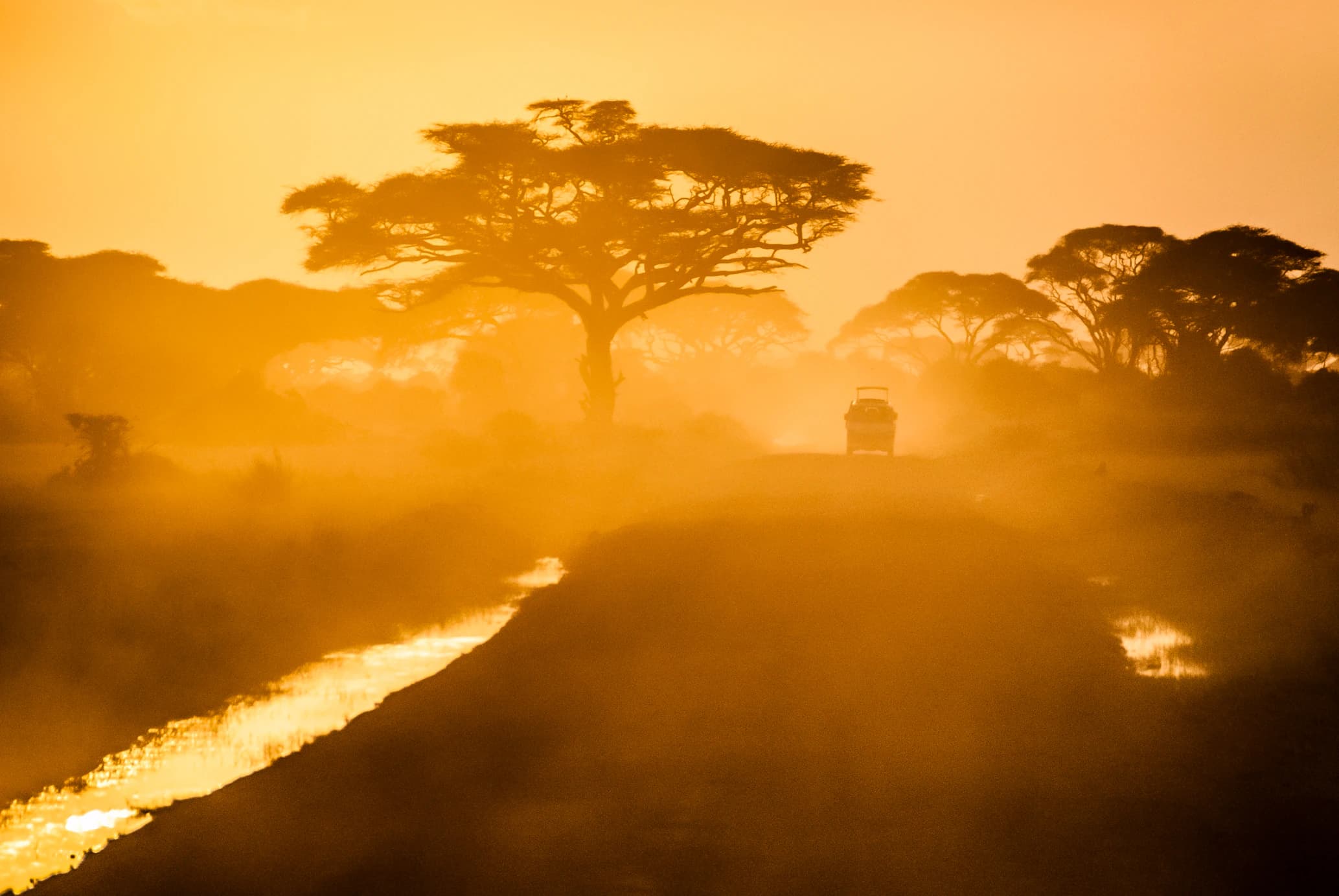
An Ocean of Sand and Silence
There is a place where the world falls away entirely. No roads, no rooftops, no hum of electricity — only the vast, sculpted silence of the Sahara. Morocco's southeastern frontier holds two of the most extraordinary sand seas on earth: Erg Chebbi, whose towering amber dunes rise to over 150 metres near the village of Merzouga, and Erg Chigaga, a more remote and fiercely beautiful expanse reachable only by four-wheel-drive from the oasis town of M'Hamid. Together they represent the pinnacle of desert travel in North Africa — landscapes so immense, so profoundly still, that a single night among their dunes can reshape the way you understand solitude and splendour.
For the luxury traveller, the Sahara is not merely a destination but a transformation. It strips away the noise of modern life and replaces it with something elemental: the whisper of wind across sand, the slow procession of a camel caravan at dusk, the operatic blaze of a desert sunset that turns the entire horizon into molten gold. This is Africa at its most raw, and paradoxically, at its most refined.
The Gateway Cities
Every Saharan journey begins in Marrakech, that intoxicating collision of medieval grandeur and contemporary cool. Spend a night or two in the medina — perhaps at a restored riad with a plunge pool hidden behind cedar doors — before setting out southeast toward the desert. The road from Marrakech climbs over the High Atlas via the Tizi n'Tichka pass, a serpentine marvel of switchbacks and panoramic valleys that deposits you in the sun-scorched film-set town of Ouarzazate, gateway to the Draa Valley and the great sand seas beyond.
From Ouarzazate, the route continues east through the Dades and Todra gorges — dramatic canyons of rose-pink limestone — before arriving at Merzouga, the small desert outpost that serves as base camp for Erg Chebbi. For those seeking a more exclusive approach, a flight from Marrakech to Errachidia cuts the overland journey to roughly two hours by private transfer, delivering you to the edge of the dunes in time for sunset.
Desert Experiences Beyond Compare
The defining ritual of the Sahara is the camel trek at sunset. You mount a dromedary at the edge of the dunes and begin a slow, swaying ascent as the light turns from amber to rose to deep violet. It is a pace that belongs to another century — unhurried, meditative, profoundly beautiful. Your caravan crests a final ridge and there, spread below like a mirage, is your camp: a constellation of white canvas tents glowing softly against the darkening sand.
Overnight in a luxury desert camp is the heart of the experience. The finest properties — Scarabeo Camp, with its whitewashed nomadic aesthetic, and Desert Luxury Camp, with its king-size beds and en-suite facilities deep in Erg Chebbi — offer an experience that is simultaneously wild and indulgent. Expect hand-woven Berber rugs underfoot, candlelit dinners of slow-cooked tagine beneath open skies, and the kind of absolute quiet that city dwellers have almost forgotten exists. After dinner, your host will lay carpets on the sand and pour mint tea while a local musician plays the guembri, the hypnotic three-stringed bass lute of the Gnawa tradition.
A Cathedral of Stars
With virtually zero light pollution, the Sahara offers what may be the finest stargazing on the African continent. Step outside your tent after midnight and the sky is almost incomprehensible in its density — the Milky Way a luminous river overhead, shooting stars frequent enough to exhaust your wishes. Several luxury camps now offer telescopes and guided astronomy sessions, but honestly, the naked eye is more than enough. Lie back on the still-warm sand, listen to the silence, and let the cosmos do the rest. It is, for many travellers, the single most memorable moment of their journey.
The Route of a Thousand Kasbahs
No Saharan itinerary is complete without pausing at Aït Benhaddou, the UNESCO World Heritage ksar that has served as backdrop to films from Lawrence of Arabia to Gladiator. This fortified village of red-earth towers and crenellated walls rises above the Ounila River like a vision from a medieval manuscript. Walk its narrow lanes in the early morning, before the tour buses arrive, and you will feel the weight of centuries pressing gently on your shoulders. The route between Marrakech and the desert — sometimes called the Road of a Thousand Kasbahs — is studded with similar earthen citadels, each one a testament to the Berber genius for building beauty from the landscape itself.
Berber Culture and Hospitality
The Amazigh (Berber) people have inhabited this land for millennia, and their hospitality is legendary. Tea ceremonies are not mere formality but a genuine expression of welcome: three glasses of mint tea, poured from height into small painted glasses, each progressively sweeter — the first bitter as life, the second strong as love, the third sweet as death, as the proverb goes. In camp, you may be invited to learn the rhythms of Berber drumming, to hear stories of desert navigation passed down through generations, or simply to sit in companionable silence around a fire as the embers die. These encounters are not performative; they are the living culture of the Sahara, offered with a generosity that stays with you long after the dunes have faded from view.
When to Go
The ideal window for a Saharan journey runs from October through April, when daytime temperatures hover between a pleasant 20 and 30 degrees Celsius and nights are cool enough for a Berber blanket. The shoulder months of October and March offer the best balance of warmth and comfort. Summer — May through September — brings searing heat that can exceed 50 degrees, making all but the earliest morning excursions inadvisable. Winter nights can dip near freezing, so pack layers and request heated tents if travelling in December or January.
Practical Notes
Most travellers fly into Marrakech Menara Airport, which receives direct flights from major European and Middle Eastern hubs. The overland drive to Merzouga takes roughly eight to ten hours via the scenic southern route — best broken into two days with an overnight in the Dades Valley. For those short on time, Royal Air Maroc operates flights to Errachidia, cutting the transfer to around two hours by car. Private transfers and driver-guides can be arranged through your camp or through Afrilux9 directly, and we recommend this approach for the most seamless, personalised experience.
Activities & Excursions
The Sahara is not a passive destination. Its landscape invites movement — across dunes, through ancient gorges, and into the company of people who have read this terrain for generations.
CAMEL TREK TO THE DUNES
The unhurried ascent by dromedary at sunset is the defining Saharan ritual. Most treks depart late afternoon and reach the overnight camp as darkness falls, timing the arrival with the disappearance of the last colour from the sky. One to two hours of riding; gentle enough for all fitness levels.
QUAD-BIKE ACROSS ERG CHEBBI
For those who want a more kinetic relationship with the dunes, guided quad-bike excursions cross the outer flanks of Erg Chebbi at pace. Early-morning sessions departing before 7am catch the dunes in raking light and avoid the heat. Operators run one to three hour circuits; helmets and guides provided.
ATLAS MOUNTAINS DAY EXCURSION
The High Atlas is never more than a half-day from Merzouga. A private transfer through the Dades and Todra gorges — limestone canyons rising 300 metres above the road — makes for one of Morocco's most dramatic drives. Berber villages cling to the cliffs; walnut orchards line the valley floors. Best combined with an overnight in the gorge itself.
MARRAKECH MEDINA FOOD TOUR
For those beginning or ending in Marrakech, a guided evening food tour through the souks and Djemaa el-Fna covers the city's extraordinary culinary heritage — harira, bastilla, preserved lemon chicken, and the best msemen this side of the Atlas. Small-group tours keep pace intimate; private guides available.
DESERT STARGAZING SESSION
Several luxury camps now offer structured stargazing with telescopes and a guide trained in both astronomy and Berber celestial navigation. The session typically runs 90 minutes after dinner, covering the major constellations, the Milky Way's structure, and the stories the Amazigh people have attached to the night sky for millennia.
Ready to walk among the dunes? Begin planning your Saharan journey.
Begin Your Journey