The Private Serengeti: Inside Singita Grumeti's 350,000-Acre Kingdom
The Serengeti is a word that carries its own mythology. Most travellers who use it are thinking of a single corridor of national park, shared between minibuses and timed around the Great Migration's predictable arc. Singita Grumeti is something else entirely.
Here, Singita manages 350,000 acres of the western Serengeti ecosystem in partnership with the Grumeti Fund — a non-profit conservation organisation whose work has quietly transformed one of Africa's most consequential wildlife corridors. What you gain as a guest is not simply exclusivity. It is the rare experience of moving through a landscape that is actively, measurably improving.
Sasakwa Lodge: The Hillside Manor
The first sight of Sasakwa Lodge is arresting in the way great architecture always is — it appears to belong entirely to its landscape while also quietly dominating it. Perched high on a kopje, its Edwardian manor silhouette is visible for miles across the Grumeti plains, the surrounding hills rolling in every shade of dry-season gold.
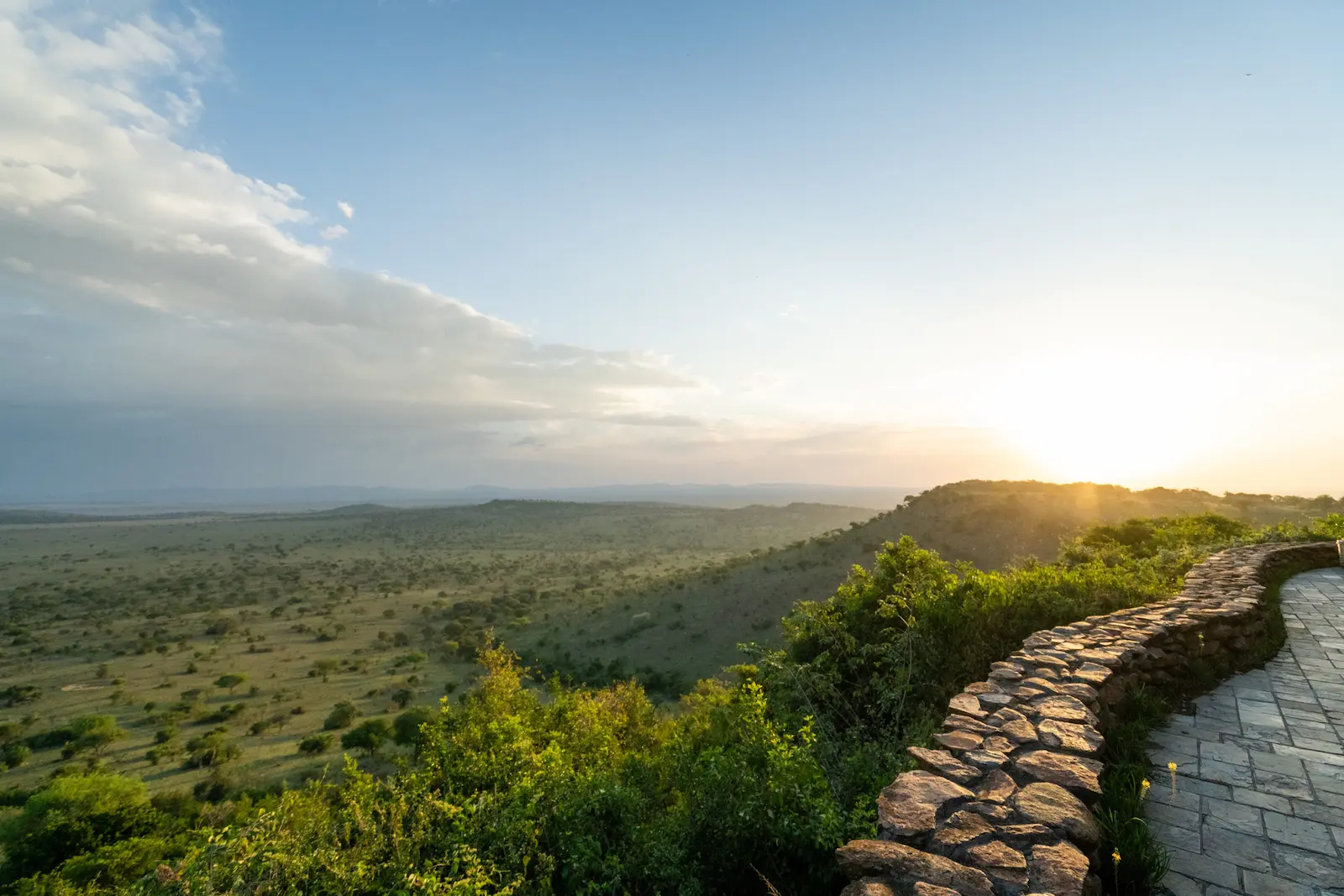 Sasakwa Lodge on its hillside kopje, overlooking the western Serengeti plains
Suites here are generous in the way that suggests no compromise was made in the design brief. Private plunge pools. Deep bathtubs positioned to face the plains. A rhythm of activity — dawn game drive, long lunch, late-afternoon walk among the kopje's ancient fig trees — that the lodge encourages without enforcing.
What defines a stay at Sasakwa is not any single amenity but a quality of stillness. The Grumeti concession is private, meaning the only vehicles you encounter on game drives are Singita's own. There is no convoy at a lion sighting. No shared radio frequency. This is the fundamental difference between a national park safari and a concession safari, and it changes everything.
Practical Note: Sasakwa operates a tennis court, swimming pool, and fitness centre. For guests arriving by charter, the Grumeti airstrip is a short transfer. The standard approach is via Coastal Aviation from Kilimanjaro or Dar es Salaam; a Nairobi connection works equally well for international arrivals. Flying time from Arusha is approximately one hour.
The Conservation Chapter
In 2019, the Grumeti Fund completed what is recorded as the largest single relocation and reintroduction event of critically endangered Eastern Black Rhinos in history — nine animals, transferred from South Africa. It is the kind of number that demands you pause.
Guests can engage directly with this work through anti-poaching canine unit encounters and conservation ranger briefings. These are not staged experiences for cameras. They are a window into operational conservation at scale, and they reframe every game drive that follows. When you track lion prints in the sand at Grumeti, you are moving through a landscape that has been actively defended, restored, and expanded by people who have dedicated careers to its recovery.
The species list reflects the result: buffalo, wildebeest, elephant, lion, leopard, cheetah — and now, returning rhino.
Sabora Tented Camp: The Other Serengeti
 Sabora Tented Camp on the open plains at dusk
If Sasakwa is the manor, Sabora Tented Camp is the field camp — or rather, what a field camp would look like if designed with the same considered hand. Canvas walls, timber floors, ceiling fans turning slowly overhead. It sits directly on the plains, which means the Serengeti arrives at the door without ceremony.
At Sabora, you return from a game drive to a tent where the sounds of the ecosystem do not stop at the perimeter. A hyena calling across the dark is not entertainment here — it is context. This is the experience that purists seek: the sensation of sleeping in Africa rather than near it.
 The interior of a Sabora tent — canvas, timber, and the plains beyond
 A zebra moving through Sabora Tented Camp
The two properties make compelling sense as a combined visit. A night or two at each illuminates both: the manor and the camp are different arguments for the same wilderness, and staying in each gives you a conversation rather than a single statement.
The Balloon
No account of the Grumeti is complete without acknowledging the hot air balloon safari. Dawn over the western Serengeti, from the elevation of a balloon basket, is one of those experiences that renders description inadequate.
 Hot air balloon over the Serengeti at dawn
The wildebeest migration corridor passes through this section of the ecosystem. The timing of a Grumeti visit — June through August is peak, though the plains hold exceptional game year-round — determines what you witness from the air. A river crossing seen from above is an experience of a different order to one seen from a vehicle.
Insider Note: Book the balloon at the time of lodge reservation. Slots are limited and fill quickly in migration season. The landing traditionally ends with a champagne breakfast in the bush — a detail that Singita executes with the same attention to ceremony it applies to everything else.
Afrilux9 Verdict: The Grumeti concession is not a luxury variant of the standard Serengeti experience. It is a categorically different proposition: a private ecosystem, actively managed, where every game drive occurs in a landscape the operator has spent decades restoring. Sasakwa offers the setting; Sabora offers the immersion. Together, they make the case that the finest safari is not merely about what you see — but about what you understand by the time you leave.
Inspired by This Journey?
Search flights and hotels to start planning your own African escape.
Begin Your Journey